
Greyhound Racing in Essex: Tracks, History and Betting Culture
 Available in US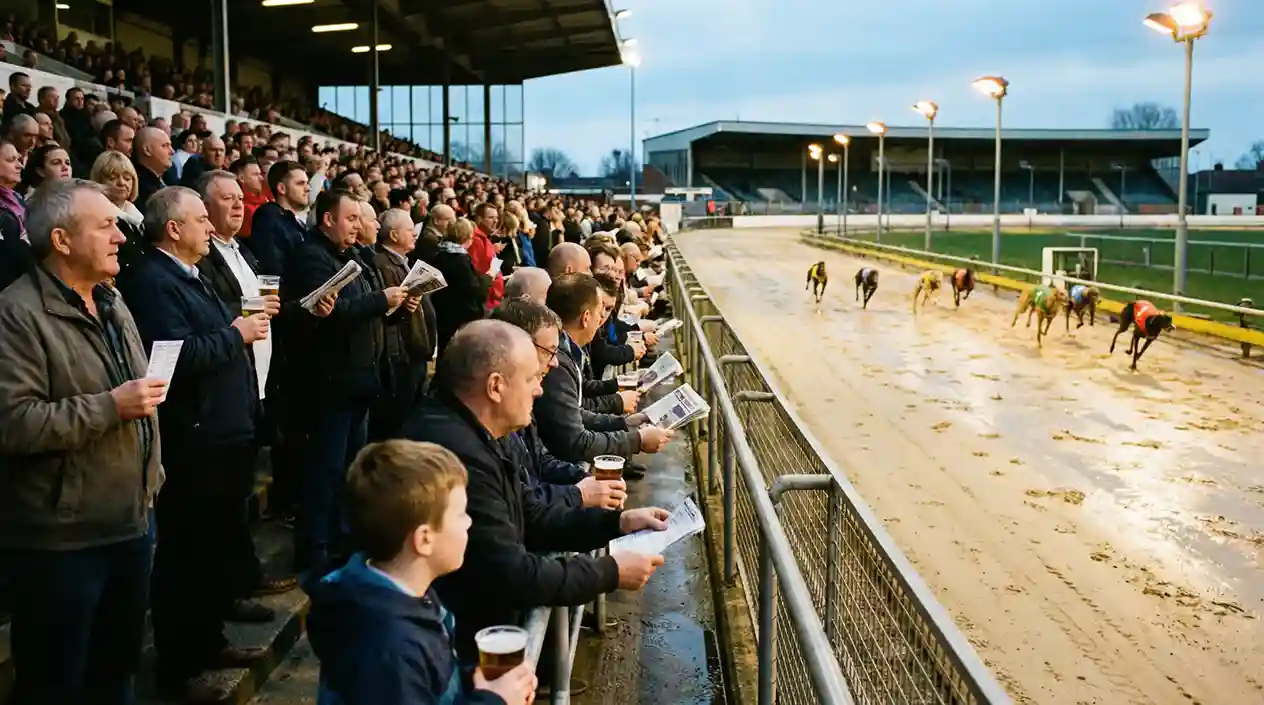
Essex and the Dogs — A Racing Tradition
Essex has been greyhound country for decades — and the tracks that remain still draw punters with the same pull that attracted their parents and grandparents. The county’s relationship with greyhound racing runs deeper than sport. It’s social infrastructure: a midweek evening out, a shared experience with mates, a reason to study form and argue about traps over a pint. The culture around the dogs in Essex is inseparable from the betting, and the betting is inseparable from the community that sustains it.
The story of greyhound racing in Essex is also a story of contraction. Tracks have closed over the decades — lost to development, declining attendance or economic pressure. The venues that survive do so because they adapted, maintaining regular fixtures, attracting BAGS contracts for betting-shop coverage, and offering online streaming that extends their audience beyond the stadium gates. Harlow, the county’s most active licensed track, represents this modern model: a facility that serves both on-course spectators and the much larger online betting audience.
Track Harlow results at harlowdogresults.
This guide looks at the active and historic greyhound tracks in Essex, the social culture that surrounds the sport, and how the betting experience differs between trackside and online.
Active and Historic Greyhound Tracks in Essex
Harlow, Romford and the ghosts of tracks past — that’s the short version of greyhound racing’s footprint in Essex and its immediate surroundings.
Harlow Stadium, on Roydon Road, has operated since 1995 and hosts regular meetings throughout the week, including both evening and morning sessions. Its 354-metre track offers five racing distances from 238 to 946 metres, making it one of the more versatile circuits in the region. Harlow is GBGB-licensed, covered by SIS for bookmaker streaming, and features on the RPGTV schedule for selected meetings. For punters, Harlow offers a consistent, well-documented racing programme with enough data depth to support serious form analysis.
Romford Stadium, technically in the London Borough of Havering but historically and culturally part of the Essex racing scene, is the region’s premier venue. Its larger track, stronger fields and Sky Sports Racing coverage make it the highest-profile greyhound stadium in the area. Romford has hosted open races and regional championships for decades and continues to attract strong fields from kennels across South-East England. For bettors, Romford offers more liquid markets and higher-quality racing than most smaller circuits.
The historic record is longer and more poignant. Essex and the surrounding area once supported a much larger network of greyhound tracks. Walthamstow Stadium, though technically in North-East London, was a spiritual home of Essex greyhound culture — its closure in 2008 was felt across the region. Southend, Rayleigh and other Essex venues have also closed over the years, each taking with it a piece of the sport’s community infrastructure.
The closures reflect broader trends in UK leisure and property economics rather than a loss of interest in the sport itself. Urban tracks on valuable land faced pressure from developers, and some operators found the property value more attractive than the racing revenue. The tracks that survived — Harlow and Romford chief among them — did so by balancing community service with commercial viability. Their continued operation is not guaranteed, which makes supporting them through attendance and betting a genuinely consequential act for anyone who values the sport.
The Social Side of Going to the Dogs in Essex
A night at the dogs is part sport, part social event, part betting education. The atmosphere at a live greyhound meeting is distinct from any other sporting experience in the UK. It’s smaller and more intimate than horse racing, less formal, and built around a rhythm of short, intense races punctuated by gaps that are perfect for conversation, food and — inevitably — analysis of the next race.
At Harlow, a typical evening meeting draws a mix of regulars, casual groups and occasional visitors. The regulars arrive with form guides, notebooks and established betting patterns. The casual groups come for the experience — a birthday outing, a work social, a Friday night alternative to the pub. Both audiences are served by the same product, but their engagement levels differ, and the track’s atmosphere benefits from the combination of serious punters and social attendees.
Trackside facilities at most UK greyhound stadiums include a restaurant or function room, bars, and an outdoor viewing area along the home straight. Some tracks offer packages that include a meal, a race card and a betting voucher — designed for group bookings and special occasions. These packages have been a staple of greyhound track revenue for decades and remain popular, particularly for corporate entertaining and celebrations.
The social element feeds the betting culture. Conversations at the track between races are dominated by form discussion — which trap has the best draw, why the favourite might be vulnerable, whether the weather has changed the going. These conversations happen between strangers as naturally as between friends, and they’re part of why the trackside experience feels communal rather than transactional. The shared act of studying the same race card, debating the same dogs and sweating the same result creates a bond that online betting, for all its convenience, doesn’t replicate.
Betting at Essex Tracks — Trackside vs Online
On-course tote pools and trackside bookmakers offer a different experience from online betting. The mechanics of placing a bet are different, the odds structures can differ, and the atmosphere influences decision-making in ways that online punters don’t experience.
Trackside, you have two primary betting options: the tote and on-course bookmakers. The tote is a pool-based system where all stakes on a given bet type are pooled together and the returns are determined by the pool size and the number of winning tickets. Tote pools at greyhound meetings are smaller than those at major horse racing fixtures, which means dividends can be volatile — a popular result pays modestly, while an upset can produce outsized returns. Forecast and tricast bets are particularly well-suited to the tote because the pool-based dividends on surprising results often exceed what fixed-odds bookmakers would pay.
On-course bookmakers — the independent traders operating in the betting ring — offer fixed odds that you can see on their boards before placing your bet. These odds are set by the bookmakers based on their own assessment and the flow of money from other punters at the track. On-course prices are what the official SP reporter uses to determine the starting price, so betting with on-course bookmakers means you’re directly participating in the market that sets SP.
Online betting offers convenience, broader comparison and access to promotions like BOG that aren’t available on-course. The trade-off is that you lose the sensory experience of being at the track: watching the dogs parade, feeling the atmosphere, and making decisions in the environment where the race is happening. Some punters find that the trackside atmosphere improves their decision-making by connecting them more closely to the event. Others find it distracting and prefer the analytical calm of betting from home.
The pragmatic approach is to do both. Attend live meetings when possible — the experience enriches your understanding of the sport and sharpens your eye for running styles, track conditions and the subtle details that data alone doesn’t capture. Bet online for the meetings you can’t attend, using the analytical tools and comparison options that the digital environment provides. The two approaches complement each other, and the punter who combines them develops a more complete understanding of greyhound racing than one who relies on either alone.
The Track Survives Because the Crowd Returns
Greyhound racing in Essex isn’t just history — it’s a live proposition, several times a week. Harlow runs both evening and morning meetings across the week. Romford adds its own schedule. Between them, there’s racing available most evenings and many mornings, providing a continuous stream of opportunities for bettors and a regular gathering point for the community that cares about the sport.
The tracks survive because people keep showing up — in person and online. Every ticket sold, every bet placed, every streaming view contributes to the economic viability of a sport that has no guarantee of perpetual existence. The tracks that closed didn’t disappear because the sport failed; they disappeared because the economics shifted and no one could reverse the equation in time.
Get venue details in our Harlow stadium track guide.
If you value greyhound racing — its rhythm, its culture, its analytical challenge, its community — support it. Go to the track when you can. Bet on the meetings when you can’t. Study the form, learn the dogs, appreciate the sport for what it is: a working-class tradition that has endured for nearly a century in Essex and still offers something that no app, no algorithm and no virtual product can replicate — live competition, genuine uncertainty, and the shared thrill of watching six dogs chase a hare around a sand track on a Friday night.
