How Greyhound Kennel and Sire Lines Affect Performance
 Available in US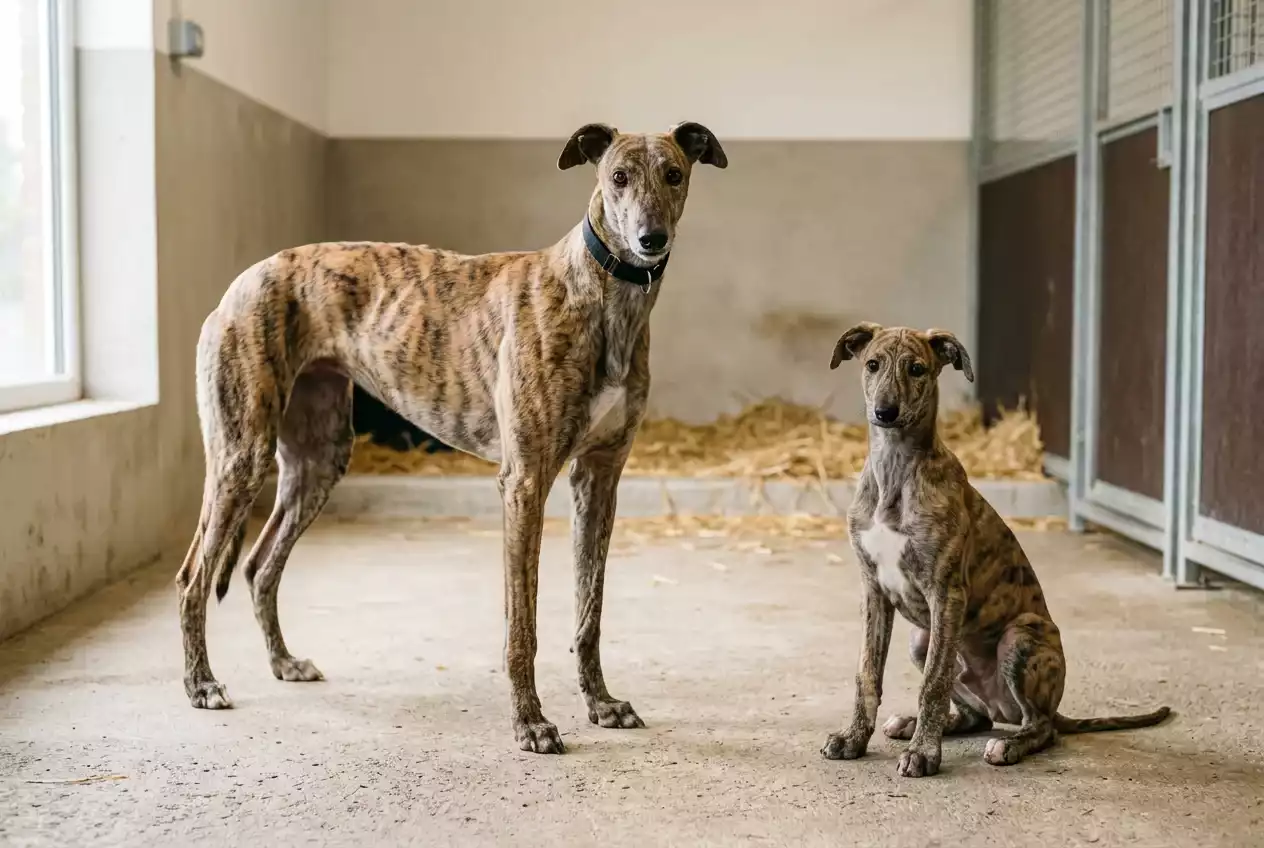
Breeding Tells You Potential — Form Tells You Reality
Pedigree matters in greyhound racing, but it doesn’t override what happens on the track. A well-bred puppy from champion sire lines might never win a race if it lacks the temperament, the training or the luck to convert genetic potential into competitive performance. Conversely, a dog from an unremarkable pedigree can excel through superior conditioning, ideal training and the right racing environment. Breeding sets the range of possibility. Everything after that is execution.
That said, pedigree analysis has its place in a punter’s toolkit — particularly at the early stages of a dog’s career, when racing form is sparse and other data is limited. A puppy making its first few starts has no sectional history, no trap record at the track and no graded form to interpret. In those situations, knowing what the sire and dam lines typically produce — speed, stamina, trap agility, consistency — provides a rough guide to what you might expect.
Discover more at harlowdogresults.
This guide covers the leading sire lines in UK racing, explains what kennel quality signals about a dog’s preparation, and shows how to incorporate pedigree information into your form analysis without overweighting it.
Leading Sire Lines in UK Greyhound Racing
Certain sire lines produce speed; others produce stamina. The dominant bloodlines in UK greyhound racing evolve over time as champion sires produce offspring who go on to become sires themselves, but the general pattern is that speed and stamina traits run in families.
Historically, specific sire lines have dominated different eras of UK racing. Sires whose offspring consistently produce fast trap speed and strong early pace become prized in breeding programmes aimed at producing sprint and standard-distance racers. Other sire lines are valued for producing progeny that stay longer distances, handle heavy going better, or show the durability to race consistently over a full season without losing form.
The GBGB maintains the official stud book and pedigree records for all registered greyhounds in the UK. These records trace each dog’s lineage through multiple generations, allowing breeders and analysts to identify the genetic influences behind a dog’s performance characteristics. For punters, the full pedigree depth is less important than the immediate sire and dam — particularly the sire, whose influence on racing characteristics is more statistically documented because sires produce more offspring than individual dams.
Sire statistics are available through specialist breeding databases and some greyhound statistics services. These databases record the average race performance of each sire’s offspring — win rates, preferred distances, average finishing times — which provides a statistical profile of what the sire line typically produces. When you see a new puppy on the card sired by a known speed producer, you can reasonably expect the offspring to show early pace. Whether it actually does is another matter — genetics provides the tendency, not the guarantee.
The dam’s contribution is equally important biologically but less thoroughly documented statistically, because most dams produce fewer racing offspring than sires. However, experienced breeders and analysts pay close attention to dam lines, particularly when a dam has produced multiple successful racers. A puppy from a proven dam — one whose previous litters have included open-race winners — carries additional pedigree confidence.
One practical point: pedigree value diminishes rapidly as a dog accumulates racing form. After ten or fifteen competitive outings, the dog’s actual performance record is a far better predictor of future results than its bloodlines. Pedigree analysis is most useful in the first handful of starts and becomes essentially irrelevant once robust form data exists.
Kennel Quality and What It Signals
Top kennels invest in conditioning, nutrition and track preparation — and the results show in the consistency and longevity of their dogs’ racing careers.
The kennel — the trainer’s facility where the greyhound lives, trains and recovers between races — has a direct impact on performance. A well-run kennel provides appropriate exercise, high-quality nutrition, veterinary oversight and a training regimen that prepares dogs specifically for the tracks they’ll race at. The difference between a top-tier kennel and an average one isn’t always visible in a single race result, but it becomes clear over a season: dogs from better kennels tend to maintain form longer, recover from setbacks faster, and perform more consistently.
For punters, kennel quality is best assessed through trainer statistics rather than direct observation. A trainer whose dogs consistently outperform their grades, maintain positive ROI over meaningful sample sizes, and transition successfully between distances and tracks is running a high-quality operation. These trainers are doing the invisible work — the conditioning, the diet management, the race-day preparation — that turns genetic potential into racecourse performance.
The link between kennel and sire lines is also worth noting. Top kennels often have first access to well-bred puppies because breeders prefer to place promising young dogs with trainers who have a track record of developing talent. This creates a reinforcing cycle: good kennels attract good dogs, good dogs produce good results, and good results attract more good dogs. For bettors, this means that the combination of a strong sire line and a top trainer is a more powerful signal than either factor alone.
Conversely, a well-bred puppy placed with a mediocre trainer may underperform its pedigree. If the conditioning is substandard, the race selection is poor, or the training doesn’t develop the dog’s natural attributes, the genetic potential goes unrealised. Pedigree without preparation is just biology.
Incorporating Pedigree into Betting Analysis
Pedigree data is most useful for unraced puppies and early-career dogs, and its value decreases with every race the dog completes.
When assessing a dog’s first or second career start, check its sire line and dam record if available. If the sire is known for producing fast trappers, expect the puppy to show early pace — and factor that into your pace map for the race. If the sire line is associated with stamina, be cautious about backing the puppy in a sprint where raw trap speed dominates.
For dogs with established form — say, ten or more starts — pedigree adds almost nothing to the analysis. The dog’s actual race record, sectional times, trap performance and grade trajectory provide all the information you need. Referencing pedigree at this stage is like checking a footballer’s youth academy record before a Premier League match — interesting but operationally irrelevant.
The one exception is distance changes. When a dog with established standard-distance form is entered at a longer trip for the first time, pedigree can hint at whether the dog is likely to handle the extra distance. A sire line associated with stamina and staying power suggests the transition might suit the dog. A sire line known for pure speed suggests the dog may struggle beyond its natural trip. This isn’t definitive — plenty of dogs surprise their pedigree — but it’s a reasonable tiebreaker when other data is ambiguous.
Blood Runs Fast — But Training Runs Faster
The gene pool sets the ceiling. Everything else determines how close the dog gets. Pedigree gives a greyhound its physical potential — muscle fibre composition, body structure, natural stride pattern, temperament. But converting that potential into winning race performance requires training, conditioning, race selection, nutrition and the hundred small decisions a trainer makes every week.
Also read about greyhound trainer statistics.
For punters, the lesson is clear: pedigree is a supplement to form analysis, not a substitute for it. Use it when form data is thin, acknowledge it when evaluating kennel quality, and set it aside once the dog’s racing record speaks for itself. The blood tells you what the dog could be. The form tells you what it is.
