Greyhound Racing Rules in the UK: What Bettors Must Know
 Available in US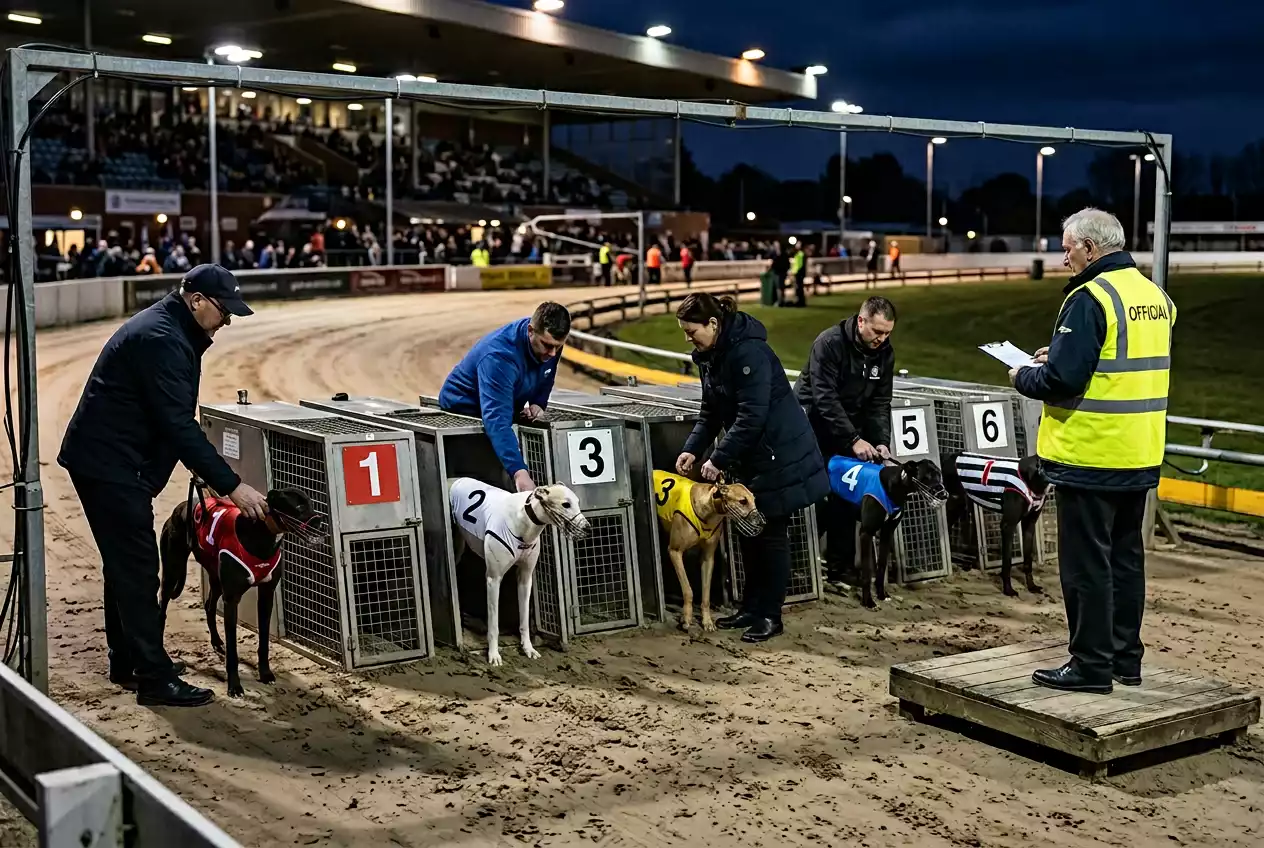
Racing Rules Shape Every Bet You Place
UK greyhound racing operates under GBGB rules — and those rules directly affect payouts. The Greyhound Board of Great Britain sets the framework that governs everything from how dogs are graded to how races are conducted, how withdrawals are handled and how results are declared. As a bettor, you don’t need to memorise the entire rulebook, but you do need to understand the rules that touch your money: the ones that determine when a bet stands, when it’s voided, and when your payout is adjusted.
Ignorance of these rules doesn’t protect you from their consequences. A bet affected by a Rule 4 deduction still pays less. A dead-heat result still halves your return. A void race still returns your stake instead of the profit you expected. Knowing these outcomes in advance means you can factor them into your betting decisions rather than being surprised by them after the fact.
This guide covers the regulatory structure, the race-day rules that most commonly affect bettors, and the betting-specific rules that determine how your wagers are settled.
Explore all racing content at harlowdogresults.
GBGB — The Governing Body and Its Role
The Greyhound Board of Great Britain oversees all licensed racing in the UK. Established as the regulatory body for the sport, the GBGB is responsible for licensing tracks, registering dogs, licensing trainers and racing officials, setting welfare standards, and maintaining the integrity of the sport.
For bettors, the GBGB’s most relevant function is its oversight of racing operations. The Board sets the rules that govern race conduct — how traps are loaded, how the lure is operated, how results are determined and how disputes are resolved. It also oversees the grading system that determines which dogs race against each other, which directly affects the quality and competitiveness of the fields you bet on.
The GBGB works alongside the UK Gambling Commission, which regulates the betting industry itself. The UKGC licenses bookmakers and ensures that the markets offered on greyhound racing are fair and properly governed. The distinction is important: the GBGB regulates the racing, the UKGC regulates the betting. Together, they create the framework within which every greyhound bet in the UK is placed and settled.
Welfare is an increasingly prominent part of the GBGB’s mandate. Regulations covering kennel conditions, veterinary inspections, retirement and rehoming programmes, and drug testing all fall under the Board’s authority. While welfare rules don’t directly affect your betting, they influence the overall health of the sport — and a well-regulated sport with strong welfare standards is one that sustains public confidence and commercial interest, both of which are good for punters.
Race Day Rules — Withdrawals, Reserves and Void Races
When a dog is withdrawn, a reserve may step in — or the race runs with five. The handling of withdrawals is one of the most common race-day scenarios that affects bettors, and understanding the process prevents confusion when the card changes between your analysis and the off.
Withdrawals can happen at any point from the declaration stage through to the moment before the traps open. Early withdrawals — those declared before the final card is published — usually result in a reserve being drawn into the vacant trap. The reserve takes the trap number and jacket colour of the withdrawn dog. Late withdrawals — those occurring after the market has opened — may or may not be replaced depending on reserve availability. If no reserve is available, the race runs with an empty trap.
For bettors, the timing of the withdrawal determines the settlement rules. If a dog is withdrawn before the off and the race proceeds with five runners, any bets on the withdrawn dog are voided and stakes returned. Bets on the remaining runners may be subject to Rule 4 deductions if the withdrawal occurred after the market opened. If a reserve steps in, bets placed on the original dog do not transfer to the reserve — they’re voided.
Void races occur when the stewards determine that a race cannot be fairly concluded. This might happen if the lure malfunctions, if multiple dogs are involved in a serious incident, or if a technical failure affects the timing or result. When a race is declared void, all bets on that race are voided and stakes returned. Void declarations are rare but not unheard of — a lure malfunction or a dog running loose on the track can trigger one.
Re-runs are another possibility. If a race is declared void but the stewards determine it should be re-run, the re-run is treated as a new race for betting purposes. Bets on the original race are voided, and new bets can be placed on the re-run. The re-run may have a different field if any dogs were injured or withdrawn as a result of the incident that caused the original void.
No-race declarations differ slightly from voids. A no-race typically results from a technical issue (trap malfunction, hare failure) that prevents the race from starting properly. The distinction between a void and a no-race can vary by track rules, but the betting outcome is usually the same: stakes returned.
Betting Rules — Dead Heats, Rule 4 and Settlement
Dead heats halve your payout; Rule 4 deducts from it — both are standard settlement rules that every greyhound bettor encounters eventually.
A dead heat occurs when two or more dogs finish in an identical position according to the photo-finish judge. In a dead heat for first place, each dog is treated as having won half the race. Your bet is settled at half the odds for half the stake. On a £10 win bet at 4/1 where your dog dead-heats for first, your payout is calculated as: half the stake (£5) at full odds (4/1) = £20, plus half the stake (£5) returned. Total return: £25, compared to £50 for an outright win. Dead heats are uncommon in greyhound racing — the margin of victory is usually measurable — but they happen occasionally, particularly in tight finishes.
Rule 4 deductions apply when a dog is withdrawn after the betting market has opened. The deduction scale ranges from 5p to 90p in the pound, depending on the withdrawn dog’s odds. Short-priced withdrawals trigger larger deductions because their removal changes the market more dramatically. Rule 4 applies to the profit portion of your return, not the stake.
Settlement timing for greyhound bets is generally rapid. Results are declared within minutes of the race finishing, and winning bets are credited to your account almost immediately with online bookmakers. However, if a stewards’ inquiry is called — typically to investigate interference — settlement may be delayed until the inquiry is resolved. A stewards’ inquiry can result in a revised finishing order if a dog is deemed to have caused significant interference. Amended results change the payout for all affected bets.
Ante-post bets follow “all-in, run or not” settlement rules for major events. If your selection is eliminated in an earlier round or doesn’t reach the final, the bet loses regardless. Non-runner rules differ from standard race-day rules: in ante-post markets, there’s no void and no refund.
Each-way settlement in greyhound racing typically pays for two places at one-quarter the odds. This is the standard industry term for six-runner fields, but bookmakers can set their own terms, and promotional each-way offers (three places, better fractions) override the default. Always verify the terms displayed on your bet slip before confirming.
The Rules Aren’t Optional — Know Them
Ignorance of the rules costs money as reliably as bad form analysis. A punter who doesn’t understand Rule 4 is shocked by deductions. A punter who doesn’t know dead-heat rules miscalculates their returns. A punter who doesn’t check for late withdrawals bets on dogs that aren’t running.
Understand deductions in our rule 4 deductions.
The rules are the operating system of the sport. You don’t need to be an expert in every clause, but you need to understand the rules that affect settlement, payouts and race-day changes. Once you do, nothing that happens on race night catches you off guard — and that predictability is worth more than most punters realise.
