Greyhound Trap Statistics UK: Track-by-Track Data
 Available in US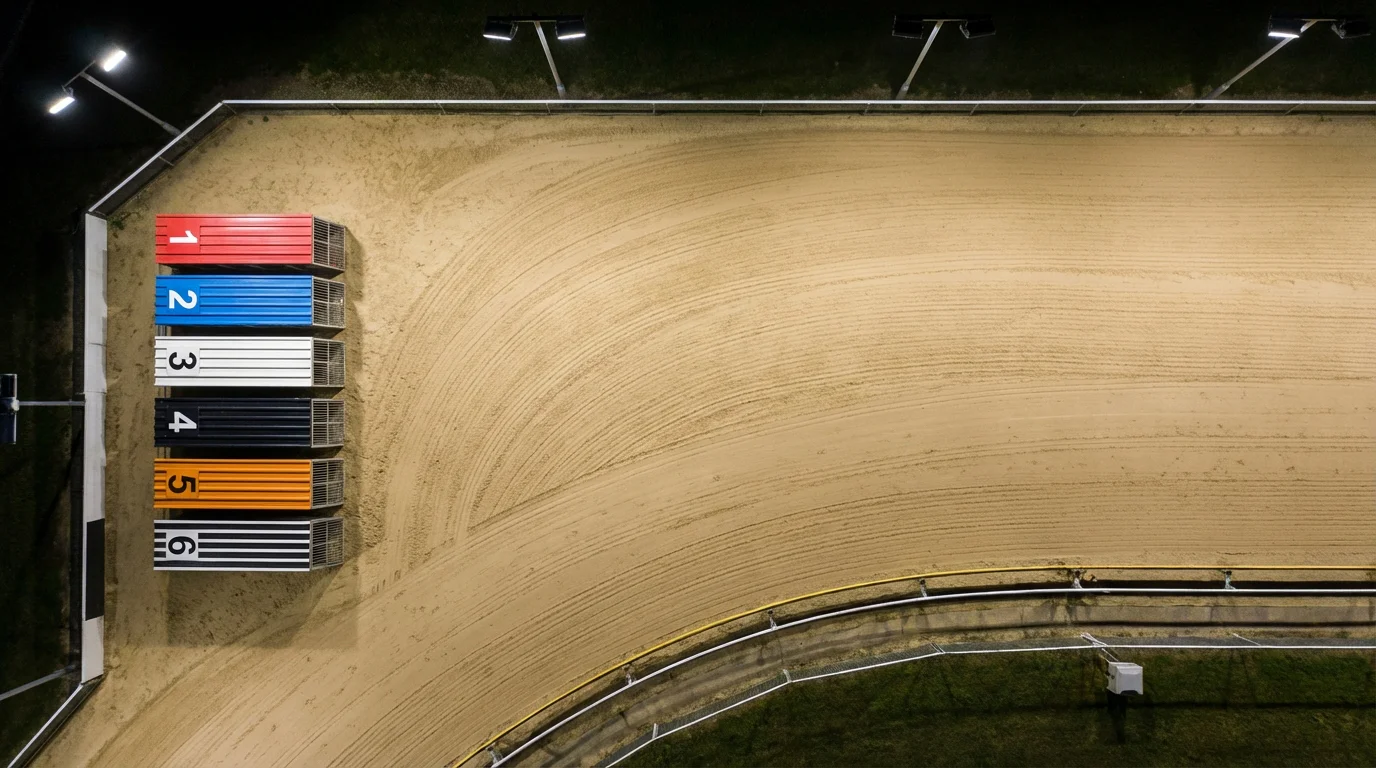
Every Track Has a Trap Bias — Data Proves It
Trap statistics vary by track, distance and surface — blanket assumptions cost money. The idea that “inside traps win more” is one of those half-truths that persists in greyhound betting because it’s roughly correct in some contexts and completely wrong in others. At certain tracks, Trap 1 does have a measurable advantage. At others, Trap 6 outperforms. At most, the picture varies depending on the distance, the going and the grading.
What’s consistent across every GBGB-licensed track in the UK is that trap bias exists. The starting position influences the outcome — that’s not debatable. What is debatable, and what separates informed punters from those operating on assumptions, is the direction and magnitude of that bias at each specific venue. The data is publicly available for anyone willing to compile or purchase it. Using it properly means understanding not just the headline percentages but the conditions under which they apply.
View trap data and results at harlowdogresults.
This guide presents the framework for interpreting trap statistics, explains how to apply them to your selections, and addresses the limitations that prevent trap data from being a standalone betting tool.
UK Trap Win Percentages by Track
In a perfectly fair six-dog race, each trap would win approximately 16.7% of the time. In reality, the figures deviate from that baseline at every track — and the pattern of deviation reveals the track’s inherent bias.
At Harlow, Trap 6 carries the strongest win percentage at approximately 21% across all distances and grades. This is notable because it contradicts the common assumption that inside traps have an inherent advantage. The explanation lies in the track’s geometry and the racing office’s seeding practices: wide runners — dogs that prefer the outside line — are typically drawn into Trap 6, and the track’s configuration rewards that running style. The inside traps at Harlow perform closer to the 16-17% baseline, with Trap 1 occasionally dipping below average when railers encounter first-bend crowding.
Other tracks show different patterns. At Romford, a tight, pear-shaped track, early pace from inside traps is crucial because the first bend arrives quickly and the inside line is the shortest route through it. Trap 1 and Trap 2 tend to outperform, particularly at sprint distances. At Towcester, where the track is larger and the bends more sweeping, the trap bias is more evenly distributed because dogs have more room to find their preferred running lines regardless of starting position.
Crayford illustrates another variation. The track’s unique shape — with a shorter back straight — creates conditions where middle traps (3 and 4) sometimes outperform the extremes. Dogs drawn in the middle have fewer obstacles to navigate: they don’t need to fight for the rail or swing wide, and they can hold a straight line to the first bend with minimal interference. The effect is modest in percentage terms but consistent enough to influence selections when other form factors are closely matched.
Sprint distances amplify trap bias at every track because the race is decided in the first few seconds. There’s less time for dogs to recover from a poor break or reposition after early crowding. At standard distances, the bias persists but its influence is diluted by the additional distance. At marathon distances, the trap draw matters primarily for the first bend; after that, stamina and running ability take over.
A note on data currency: trap statistics should be recalculated regularly. Track surfaces are maintained and occasionally resurfaced, grading office practices evolve, and the kennel population changes as dogs retire and new ones arrive. Data from two years ago may not reflect current conditions. Use the most recent twelve months of data wherever possible, and refresh your figures periodically.
How to Use Trap Data in Your Selections
Trap data is a filter, not a selector — it narrows the field but shouldn’t make the final decision on its own.
The correct way to use trap statistics is as one layer in a multi-factor assessment. When you’re evaluating a race, check whether the trap draw favours or disadvantages each runner based on the track-specific data. A dog drawn in the highest-winning trap at a given track and distance has a structural tailwind. A dog drawn in the lowest-winning trap faces a structural headwind. Neither fact is decisive on its own, but both should influence how you weight the other form factors.
Here’s a practical example. You’re assessing a six-dog race at Harlow over 415 metres. Your form analysis identifies two contenders: Trap 2 (a railer with decent sectionals) and Trap 6 (a wide runner with slightly slower sectionals but a strong finishing record). The trap data tells you that Trap 6 at Harlow over 415 metres wins approximately 22% of the time, while Trap 2 wins around 16%. That data point doesn’t override the form analysis, but it tilts the balance towards Trap 6, because the structural advantage of the trap compounds the dog’s natural running style.
Trap data is most useful as a tiebreaker. When two dogs are closely matched on form, the trap draw can separate them. When one dog is clearly superior on form, the trap data is less relevant — a good dog in a bad trap is still a good dog. The mistake is treating trap statistics as a primary selection tool and backing the highest-percentage trap regardless of what’s in it.
You can also use trap data defensively — to identify races where the trap draw undermines an otherwise strong selection. If your form study picks out Trap 1 as the likely winner but the data shows that Trap 1 at this track over this distance underperforms badly, that’s a warning signal. It doesn’t mean you abandon the selection, but it should lower your confidence and potentially reduce your stake.
Combining trap data with running-style analysis produces the sharpest results. A high-percentage trap occupied by a dog whose running style matches that trap (railer in a high-winning inside trap, wide runner in a high-winning outside trap) is a double advantage. A high-percentage trap occupied by a dog whose style conflicts with it (wide runner drawn inside, railer drawn outside) partially neutralises the statistical advantage.
Limitations of Trap Statistics
Sample size, grading changes and track modifications all affect the data, and failing to account for these limitations can lead to overconfidence in a fundamentally backward-looking indicator.
The most significant limitation is that trap statistics are aggregated across all grades, all conditions and all dogs — unless you specifically break them down. A headline figure of “Trap 6 wins 21% at Harlow” doesn’t distinguish between A1 and A10 races, dry and wet conditions, or sprint and standard distances. The figure might be 25% in A3 races and 15% in A8 races — those are very different signals. Wherever possible, use disaggregated data that’s filtered by the specific grade and distance you’re analysing.
Track modifications are another factor. When a track resurfaces, adjusts its trap positions, or changes the lure rail setup, the historical trap data becomes less reliable. These modifications don’t happen often, but when they do, the first few months of results after a change are essentially new data. Continuing to rely on pre-modification statistics can lead you astray.
Finally, trap statistics are a product of the grading system. At many tracks, the racing office deliberately seeds dogs into traps that suit their running style — railers inside, wide runners outside. This means the trap data partly reflects the quality of the seeding rather than a pure positional advantage. At tracks with strong seeding practices, the trap statistics look dramatic (high outside-trap win rates, for instance), but the underlying cause is style-matching, not geometry. Understanding this nuance prevents you from reading too much into the numbers.
Trust the Data, Then Verify with Form
Trap bias is real — but it’s one layer of a multi-layer analysis. The data gives you a baseline expectation for how each starting position performs at a given track and distance. Form analysis tells you whether the specific dogs in tonight’s race conform to or deviate from that baseline. The best selections are those where the trap data, the form data and the conditions all point in the same direction.
Also check colours and numbers.
Build your own trap database for your primary track. Record win percentages by trap, by distance and by grade over rolling twelve-month periods. Update it regularly. Compare your figures against published data to check for accuracy. And always remember that the statistics describe what happened on average, across many races — they don’t predict what will happen in any single race. The data is the context. The form is the detail. Use both.
