
What Does SP Mean in Greyhound Betting?
 Available in US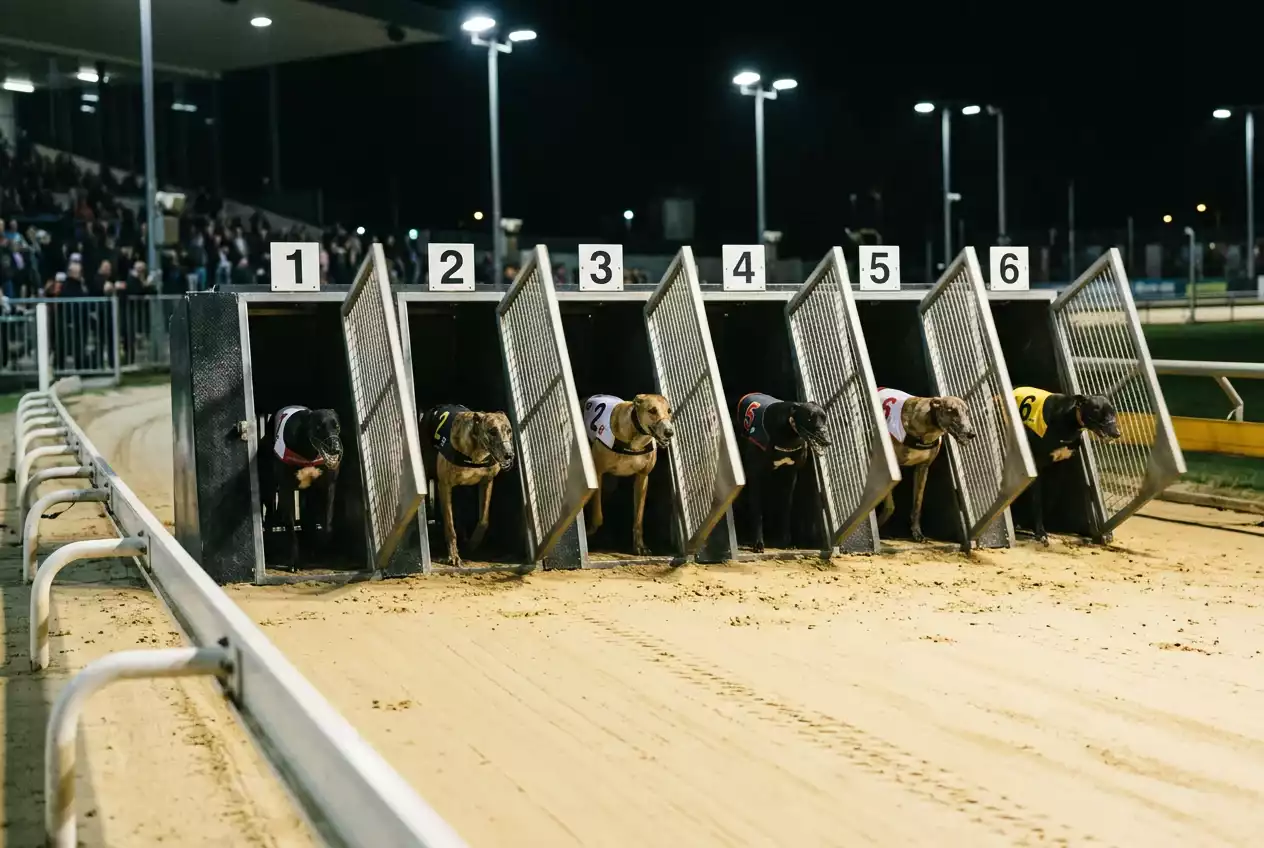
Starting Price in Greyhound Racing — Definition and Context
SP is the price at which the dog starts the race — not the price when you placed your bet. That distinction trips up more novice punters than almost any other concept in greyhound betting. When you see “SP” on a betting slip or results page, it refers to the final odds offered by on-course bookmakers at the moment the traps open. It’s a snapshot of the market’s collective view at race time, and it often differs from the odds you were quoted hours or even minutes earlier.
The term “starting price” has been a fixture of British racing for decades, inherited from horse racing and applied identically to greyhounds. Its function is simple: it provides a standardised price for settlement when no specific odds were agreed at the time the bet was placed. If you walk into a betting shop and put a fiver on Trap 3 at SP, you’re accepting whatever price that dog starts at — whether it’s 3/1 or 8/1.
For online bettors, SP works similarly but with a key difference. Most online bookmakers display fixed odds well before the race, which you can lock in by placing your bet. Choosing SP instead means you’re deliberately opting to wait for the final market assessment. There are situations where this makes sense and situations where it doesn’t, and understanding the mechanics of SP helps you make that decision with confidence.
Learn betting terms at harlowdogresults.
SP matters because it’s the reference point against which all greyhound market activity is measured. When results are published, the listed prices are SP figures. When tipsters report their records, returns are calculated to SP. When Rule 4 deductions are applied, the withdrawn dog’s SP determines the scale. It’s woven into the fabric of the sport — and any punter who doesn’t understand it is navigating without a compass.
How Starting Price Is Determined
SP is set by on-course bookmakers at the moment the traps open. The process is less mysterious than it sounds, but it has layers that matter for bettors.
At tracks with on-course bookmakers — and Harlow is one — the SP is derived from the prices available in the ring (the designated betting area at the track) just before the off. An official SP reporter, appointed by the Racing Post, records the best prices available from on-course bookmakers and uses these to calculate the returned starting price. The result is a consensus price that reflects what the market was offering in real time.
This process is largely the same for greyhounds as it is for horse racing, though the greyhound market is generally thinner. Fewer on-course bookmakers operate at dog tracks compared to major horse racing fixtures, which means the SP can be influenced by relatively small amounts of money. A few hundred pounds landing on a specific trap in the minutes before the off can shift the on-course price noticeably, which in turn moves the SP.
For meetings without an on-course betting ring — some smaller or morning meetings fall into this category — SP may be derived from the official industry starting price mechanism, which aggregates prices from approved bookmakers. The methodology varies slightly depending on the meeting and the service provider, but the principle remains the same: SP reflects the market’s final assessment of each dog’s chance.
Online bookmakers don’t set SP — they react to it. The fixed odds displayed on a bookmaker’s website are their own prices, which may be more or less generous than what the on-course market eventually returns. When you take fixed odds, you lock in that bookmaker’s assessment at that moment. When you take SP, you accept the market consensus at race time. The two can differ significantly, especially in races where late money or information causes the market to shift.
One consequence of this system is that SP prices in greyhound racing can be volatile. A sudden withdrawal, a change in track conditions reported late, or a flurry of on-course betting activity can all push the SP in unexpected directions. If you’re relying on SP, you’re exposed to these movements — for better or worse.
When to Take SP vs Early Price
SP suits some bets, early odds suit others — and the choice depends on what information you have and when you have it.
Taking an early fixed price makes sense when you believe the dog’s current odds represent value and you expect the price to shorten before the off. If you’ve done your homework on a Wednesday evening, identified a dog at 5/1 that you think should be closer to 3/1, locking in 5/1 early protects your value. If the market agrees with your assessment and the price drifts down to 3/1 by race time, your early bet looks even better.
Conversely, SP can work in your favour when you expect a price to drift — that is, when you think the market will push the odds out rather than pull them in. This happens when a well-backed dog disappoints in the market, when late information (weather changes, a rival’s withdrawal) shifts expectations, or when the on-course ring simply offers wider prices than the online bookmakers did earlier. In these cases, taking SP means you benefit from the drift without having to monitor the market constantly.
There’s also a practical consideration. If you’re betting on a race with limited form data — a puppy race, for instance, or a card where multiple dogs are running at a new distance — the market often needs time to find its level. Early prices on these races can be set wide and may not accurately reflect the runners’ real chances. SP, determined after the market has had time to absorb all available information, can be a more rational price in these situations.
The risk with SP is straightforward: you surrender control. You might end up with a better price than you expected, but you might also end up with a worse one. If a dog attracts heavy late support, its SP could be significantly shorter than the early odds. In that scenario, every punter who took the early price has a better deal than you do, and you’re left with compressed returns on the same level of risk.
As a general rule, punters who have done thorough pre-race analysis should lean towards taking early prices when they identify value. SP is more appropriate when you’re less certain about the price direction, when you’re betting in volatile markets, or when a promotion like Best Odds Guaranteed removes the downside of taking an early price.
Best Odds Guaranteed and SP
BOG means you get whichever is higher — the price you took or SP. This promotion, offered by most major UK bookmakers on greyhound racing, effectively eliminates the main risk of taking early odds.
Here’s how it works in practice. You back Trap 2 at 4/1 on Wednesday afternoon. By the time the traps open, the on-course market returns an SP of 6/1. Under Best Odds Guaranteed, your bet is settled at 6/1, not 4/1. You took the early price, but the bookmaker pays you the better one. If the SP had been 3/1 instead, your bet would settle at your original 4/1. Either way, you get the higher of the two prices.
BOG transforms the SP-versus-early-price decision. When BOG is available, there’s almost no reason to take SP deliberately. Take the early price, lock in your value, and let the BOG guarantee cover you if the market moves in your favour. The only situation where SP still makes sense under BOG is when you genuinely can’t assess the race in advance — but if that’s the case, you probably shouldn’t be betting on it at all.
Not all bookmakers extend BOG to greyhound racing, and some apply it selectively — for example, only on televised meetings or races above a certain grade. Always check the terms before assuming BOG applies to your bet. The difference between a settled price of 4/1 and 6/1 on a £10 stake is £20 in profit. Over a season of regular betting, those marginal gains compound into a meaningful difference.
SP Is a Safety Net, Not a Strategy
Relying on SP by default means surrendering control of your price — and price is one of the few variables in betting that you can actually influence. You can’t make a dog run faster. You can’t change the trap draw. But you can choose when to commit your money and at what odds.
Read our racing odds explained.
Punters who default to SP are effectively saying: “I trust the market to give me a fair price at race time.” Sometimes it will. Often, it won’t — particularly at tracks with thinner on-course markets, where a small number of bets can push the SP away from its true level.
The better approach is to use SP selectively. Take early prices when you’ve identified value. Use SP when the market is uncertain and you believe it needs more time to settle. And when BOG is available, take the early price every time and let the guarantee do the heavy lifting. SP has its place in the toolkit, but it shouldn’t be the default setting. Control what you can control — starting with the price on your slip.
