Harlow Dogs Fixture List: Upcoming Meetings and Race Schedule
Best Greyhound Betting Sites – Bet on Greyhounds in 2026
Loading...
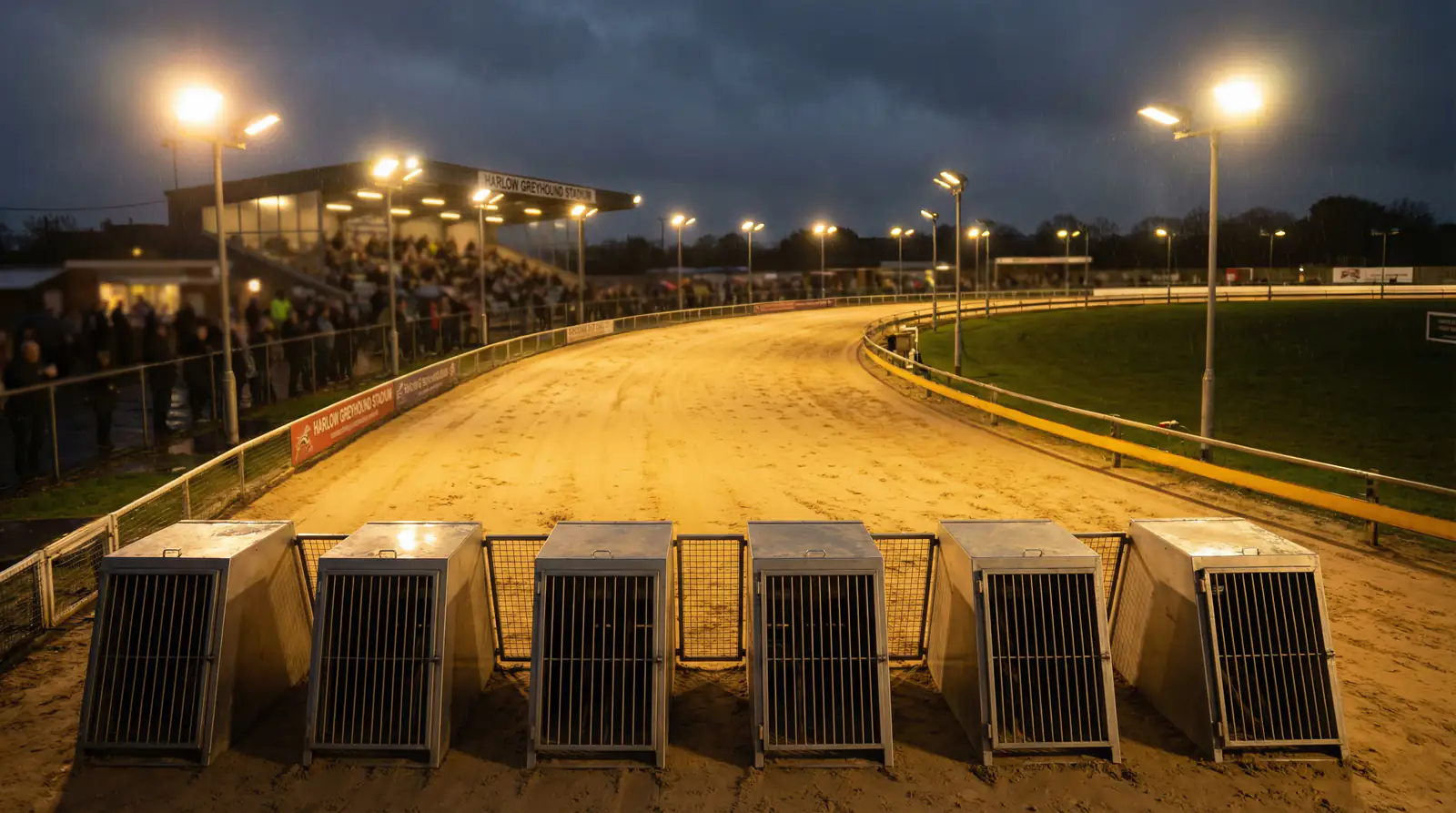
Planning Around the Harlow Calendar
Harlow runs three meetings a week — Mondays, Wednesdays and Fridays — and each session carries its own character. The midweek card tends to feature more graded racing at standard distances, while weekend sessions occasionally include open-race events and longer trips that attract stronger fields from outside the regular kennel roster. Knowing the pattern before the week begins changes the way you allocate your time and your bankroll.
Most punters treat greyhound fixtures the way they treat a TV schedule: they check what’s on tonight and react. That approach leaves you permanently behind. The fixture list isn’t a convenience — it’s an operational tool. It tells you when the graded races fall, when the open nights are scheduled, and when the card is likely to carry a different level of competition. If you’re betting Harlow regularly, these distinctions matter more than any single piece of form data.
Harlow Stadium, located off Roydon Road in Essex, has operated since 1995 and remains one of the busier GBGB-licensed tracks in the region. Its fixture list is published weekly by the track and distributed through major racing portals. The schedule is generally consistent across the calendar year, though seasonal adjustments and public holidays create variations worth tracking. Understanding those variations gives you a structural advantage that most casual bettors never develop.
This guide breaks down the weekly rhythm of Harlow’s race schedule, explains the seasonal patterns that shift race quality, and offers a practical framework for planning your betting around the fixture list rather than chasing it.
Weekly Meeting Schedule — Days, Sessions, Race Counts
Harlow’s weekly fixture operates on a three-day rotation that has remained stable for years. The core schedule divides into distinct sessions, each with its own race count and timing. Getting familiar with these details means you always know what to expect before checking the card.
Wednesday meetings at Harlow typically feature evening racing, with first race times generally falling between 18:00 and 19:00. These cards carry between ten and fourteen races, mostly graded events over the standard 415-metre distance. Wednesdays are workmanlike — they produce a steady flow of competitive but predictable racing, which makes them particularly suited to form-based betting. The fields are usually full, reserves are common, and the grading tends to be tightly banded.
Friday sessions often split into morning and evening meetings. The AM card starts early, sometimes from 10:30, and carries a slightly different profile. Morning meetings can include BAGS-contracted races (Bookmakers’ Afternoon Greyhound Service), which are designed specifically for off-course betting shops and online bookmakers. These races are broadcast through SIS and covered by the major betting operators, meaning they attract wider wagering pools than you might expect from a morning session. The evening Friday card follows the same format as Wednesday evenings.
Monday meetings at Harlow also run both morning and evening sessions. The race count varies — anywhere from ten to fourteen races depending on the track’s scheduling agreements. If you’re an online punter, Monday and Friday mornings at Harlow represent some of the best-value betting windows, as the markets are liquid and the form data is fresh from recent meetings.
Race counts across all sessions generally fall between ten and fourteen. Each meeting covers a mix of distances, though the 415-metre trip dominates the cards. Sprint races at 238 metres and longer trips at 592, 769 or 946 metres appear less frequently, usually two or three per meeting. When they do appear, the pace dynamics change enough to require different analytical thinking — something worth noting as you scan the fixture list for the week ahead.
It’s also worth noting that race times within a meeting are spaced at regular intervals — typically every fifteen to seventeen minutes. A twelve-race card, then, runs for approximately three hours from first to last race. That cadence matters if you’re watching live and making in-play assessments for later races on the same card.
Seasonal Variations and Special Meetings
The weekly pattern at Harlow holds for most of the year, but there are regular seasonal deviations that affect both the quantity and quality of racing. Ignoring these is a common mistake among punters who assume every Wednesday is the same as the last.
Public holidays produce the most visible changes. Christmas and New Year typically see additional fixtures — Boxing Day, New Year’s Day and the days in between often carry extra meetings. These holiday cards can attract stronger fields because trainers use the festive period to give their better dogs a run, particularly if major open-race competitions are approaching in January or February. For bettors, holiday meetings represent a genuine uplift in race quality that isn’t always reflected in the odds.
Summer racing at Harlow presents a different picture. Longer daylight hours sometimes mean adjusted session times, but the bigger factor is track conditions. Extended dry periods can produce a faster running surface, which affects dogs differently depending on weight and stride length. If you’re building a form picture during summer months, account for the fact that times may be generally quicker across the card — a fast time in July isn’t necessarily equivalent to a fast time in November.
Open-race nights represent the premium fixtures on Harlow’s calendar. These events feature invited runners from outside the track’s regular grading pool, meaning the fields are stronger and less predictable. Open races are scheduled periodically throughout the year and are typically announced a few weeks in advance. They attract more serious betting interest and often feature on the RPGTV or Sky Sports Racing schedules, which adds liquidity to the markets. If you only have the appetite to bet on a handful of meetings per month, open-race nights should be your priority.
The fixture list can also be disrupted by track maintenance, extreme weather or unforeseen closures. Abandoned meetings are rescheduled where possible, but the replacement date may not carry the same grading structure as the original. Always verify the card on race day rather than relying on a schedule published the previous week.
How to Plan Your Betting Week Around Harlow
Building a routine around meeting days creates consistency — and consistency is what separates punters who grind out a return from those who chase sporadic results. If Harlow is your primary track, the three-day weekly schedule gives you a natural framework for preparation, execution and review.
Start your week on Monday or Tuesday by checking the upcoming fixture list. Confirm which sessions are scheduled — morning, evening, or both — and note any special meetings or open-race events. This takes two minutes and prevents you from scrambling to assess a card ninety minutes before the first race.
Form preparation should ideally happen the day before a meeting, not the day of. For a Wednesday evening card, that means pulling race cards on Tuesday night. Study the entries, cross-reference trap draws with recent form, and flag any dogs that stand out — either as potential selections or as ones to avoid. If you’re using sectional times, trainer statistics or trap data from previous meetings, this is when you compile that information. Doing it in advance keeps your betting decisions analytical rather than reactive.
On race day itself, confirm the card hasn’t changed. Late withdrawals, reserve substitutions and scratched runners can alter the complexion of a race significantly. Check for any overnight changes, verify the weather forecast for Harlow, and adjust your assessments accordingly. This pre-meeting review shouldn’t take longer than thirty minutes if your preparation was solid.
During the meeting, discipline matters more than skill. Stick to your pre-selected races. If you flagged five races for betting out of twelve, don’t expand to eight because the early results went well. The fixture list gives you three opportunities per week — that’s enough. Trying to bet every race on every card is the quickest way to erode whatever edge your preparation provides.
After the meeting, log your results. Record what you bet, what you staked, what the outcome was, and — critically — whether the race played out as your analysis predicted. Even losing bets can be good bets if the logic was sound. Reviewing outcomes against expectations is how you improve over weeks and months. The fixture list provides the rhythm for this cycle: prepare, bet, review, repeat.
If you follow multiple tracks, prioritise. Harlow three times a week plus Romford or Crayford on other nights can quickly overwhelm your preparation capacity. Better to do thorough analysis on one track than surface-level guessing across three. The fixture list helps you choose which meetings to invest your time in — not every session demands your attention.
Routine Beats Reaction
The punters who plan their week around the fixture list outperform those who bet on impulse. That’s not speculation — it’s a consequence of how preparation compounds. Three meetings a week, fifty weeks a year, gives you roughly 150 opportunities at a single track. That volume of data, if recorded and reviewed, turns you into a specialist. Specialists find patterns. Patterns create edge.
Harlow’s schedule is stable enough to build a system around and varied enough to keep you engaged. The midweek graded races sharpen your form reading. The Friday morning sessions test your ability to assess BAGS-contracted fields with less public form. The occasional open-race night rewards the punters who saved their powder for a stronger card.
None of this works if you treat the fixture list as background noise. It’s the first piece of information you should check every week — before form, before odds, before anything else. Know when the races are. Know what kind of races they’ll be. Then decide where your time and money are best deployed. The calendar doesn’t care about your hunches. It rewards your routine.