Each-Way Betting on Greyhounds: When It Makes Sense
Best Greyhound Betting Sites – Bet on Greyhounds in 2026
Loading...
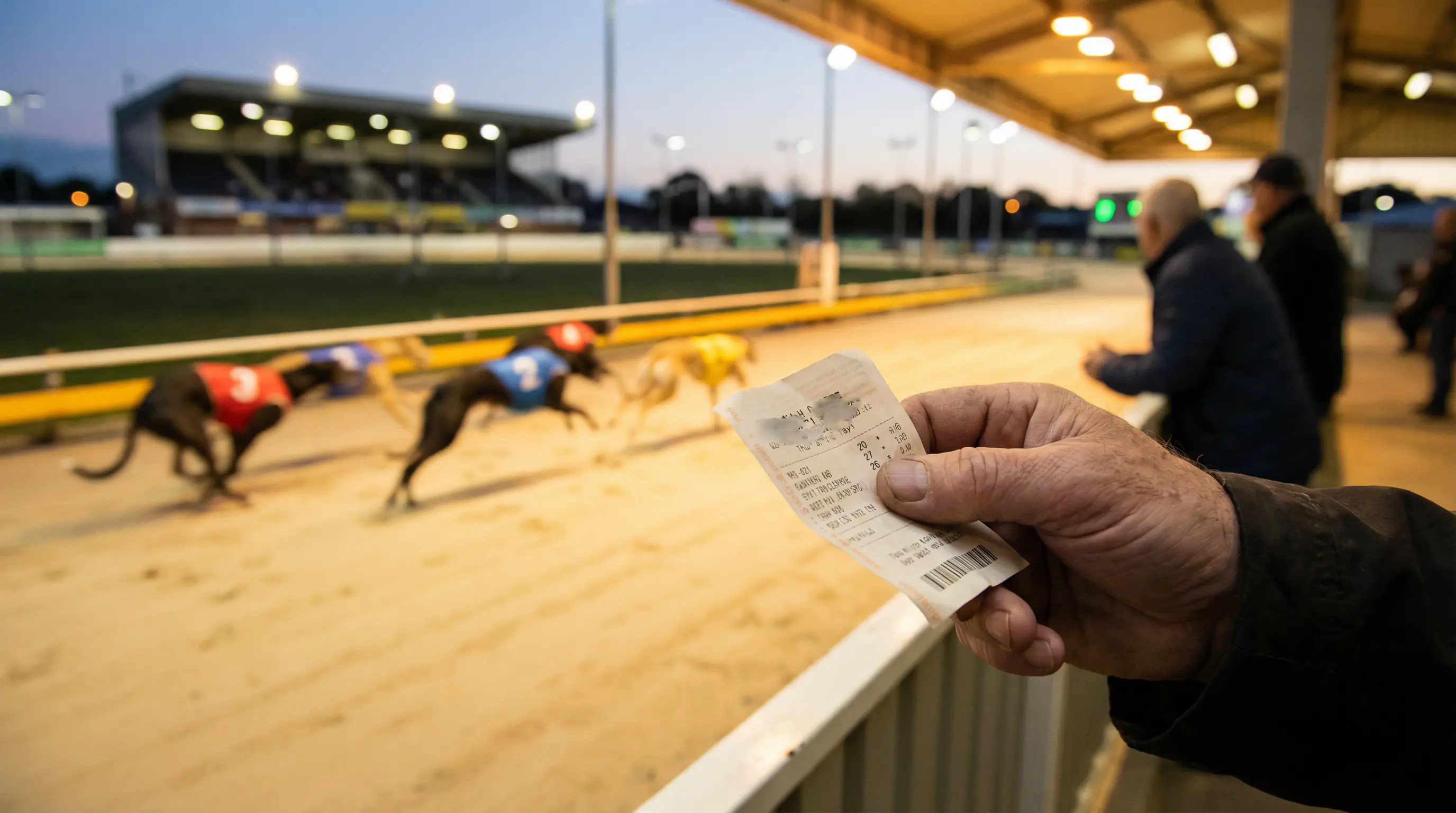
Each-Way Is Two Bets — Not a Safer Version of One
Calling each-way a “safer bet” misses what it actually is. An each-way bet is two separate wagers on the same dog: one bet on it to win, and one bet on it to place (finish in the top two in a standard six-runner greyhound race). Your total stake is doubled — a £5 each-way bet costs £10 — and the two components are settled independently. If the dog wins, both bets pay. If it finishes second, only the place part pays. If it finishes third or worse, you lose both.
The confusion arises because punters often describe each-way as a hedge or a safety net. In reality, it’s a deliberate structural decision about how you allocate your money. You’re choosing to split your risk between a higher-reward outcome (the win) and a lower-reward but higher-probability outcome (the place). Whether that split makes mathematical sense depends entirely on the odds, the number of runners, and the place terms offered by the bookmaker.
In greyhound racing, each-way betting has specific characteristics that differ from horse racing. Fields are smaller — six dogs, not twelve or twenty — which compresses the place odds and changes the value equation. Understanding those mechanics is the difference between using each-way as a precision tool and using it as a comfort blanket.
This article explains exactly how each-way works in greyhound racing, identifies the scenarios where it adds value, and highlights the mistakes that cost punters money.
How Each-Way Works in Six-Dog Greyhound Races
In a six-runner race, the place part of an each-way bet usually pays at one-quarter of the win odds for the first two finishers. This is the standard industry term, though it’s always worth confirming with your bookmaker because terms can vary by operator and by promotion.
Let’s work through an example. You back Trap 4 at 6/1 each-way with a £5 unit stake. Your total outlay is £10 (£5 win, £5 place). If Trap 4 wins, your win bet returns £35 (£5 x 6/1 = £30 profit plus your £5 stake) and your place bet returns £12.50 (£5 x 6/4 = £7.50 profit plus your £5 stake). Total return: £47.50 from a £10 outlay. If Trap 4 finishes second, you lose the £5 win bet but collect £12.50 from the place bet. Net result: a £2.50 profit. If the dog finishes third or below, you lose the full £10.
The place fraction — one-quarter of the win odds — is the critical number. At 6/1, the place part pays 6/4, which is a reasonable return. At 2/1, the place part pays 2/4, which is just 1/2. A place return at 1/2 odds on a £5 stake gives you £2.50 profit — barely enough to offset the £5 you lost on the win bet. This is why each-way at short prices rarely makes sense in greyhound racing.
Some bookmakers offer enhanced each-way terms as promotions — paying for three places instead of two, or offering one-third of the odds rather than one-quarter. These promotions change the maths significantly and should be factored into your decision whenever they’re available. Three-place each-way terms in a six-dog race are genuinely generous and shift the break-even point in the punter’s favour.
It’s also important to note that each-way bets are settled at the odds you took, not at SP, unless you specifically bet at SP. If you take 6/1 each-way and the dog drifts to 10/1 by the off, you still get paid at 6/1 (though Best Odds Guaranteed would give you the better price if available). Conversely, if the price shortens to 3/1, your locked-in 6/1 looks much better — but only on the win part. The place part at 6/4 versus 3/4 makes less difference.
When Each-Way Adds Value — and When It Doesn’t
Each-way shines on outsiders with place potential, not on favourites. This is the core principle, and everything else follows from it.
The value in each-way betting comes from the place component. If you believe a dog has a realistic chance of finishing in the top two but might not quite win, the place bet gives you a profitable return even without a victory. This scenario is most common with mid-priced or longer-priced dogs — those at 4/1, 6/1, 8/1 or bigger — where the place fraction returns enough to make the bet worthwhile even if the win part misses.
Consider a dog at 8/1 that you assess as having a strong place chance. The place fraction at one-quarter gives you 2/1 on the place part alone. A £5 each-way bet costs £10, but the place return at 2/1 is £15 — a £5 profit. If the dog wins, your total return is £60. The risk-reward profile here is favourable: you have a good chance of at least breaking even through the place component, with significant upside if the dog wins.
Now consider backing the 6/4 favourite each-way. The place fraction is just 6/16, or approximately 3/8. A £5 place bet at 3/8 returns £6.88 — a profit of £1.88 on the place part. But you’ve staked £10 total, so even with a second-place finish, you’re down £3.12. The maths simply doesn’t work. The favourite needs to win for the bet to be profitable, which defeats the entire purpose of going each-way.
The sweet spot for each-way greyhound bets is generally between 4/1 and 10/1. Below 4/1, the place returns are too thin to justify the double stake. Above 10/1, the dog’s overall chance of placing becomes lower, which increases the risk of losing both bets entirely. Within that range, each-way offers a genuine structural advantage when applied to dogs with strong place credentials — consistent top-two finishers, reliable early pace, or favourable trap draws against weaker fields.
Track characteristics also influence each-way value. At smaller, tighter tracks like Harlow or Crayford, where early pace and trap position have an outsized effect, dogs with tactical advantages often place consistently even when they don’t win. If you’ve identified a dog that typically gets a clear run to the first bend and holds position without necessarily having the speed to win, each-way can be the right structure for that assessment.
Common Each-Way Betting Mistakes
Backing a short-priced favourite each-way almost guarantees negative expectation, and it’s the most common mistake in the category. The previous section showed why the maths don’t work at short prices, but the error persists because punters conflate “safety” with “value.” An each-way bet on a 1/1 shot is not safer — it’s just more expensive for the same outcome.
Another frequent mistake is using each-way as a default bet type regardless of the race. Some punters put every selection each-way, treating it as a universal approach. But each-way isn’t universally appropriate. In a race where you’ve identified a strong winner but don’t rate anything else for the places, a straight win bet makes more sense. The place component only adds value when you’re confident the dog will finish in the top two.
Doubling the stake without acknowledging the doubled risk is a subtler error. Punters who bet £5 each-way often think of it as a £5 bet. It’s not — it’s a £10 commitment. Over a full card of twelve races, backing three selections each-way at £5 costs £30, not £15. If you don’t adjust your staking plan for the doubled outlay, each-way betting will drain your bankroll faster than straight win bets at the same unit stake.
Finally, neglecting to check the each-way terms is a mistake that costs real money. Not all bookmakers offer the same place terms on greyhounds. Some pay two places at one-quarter odds, others pay two places at one-fifth odds, and promotional terms may offer three places or better fractions. The difference between 1/4 and 1/5 of the odds on a 6/1 shot is 6/4 versus 6/5 on the place part — a meaningful gap over time. Always confirm the terms before placing the bet.
Use Each-Way as a Tool, Not a Habit
The best punters use each-way selectively — never by default. It’s a structural option that serves specific situations: mid-priced dogs with strong place form, races where the win outcome is uncertain but the place is likely, and markets where the place fraction offers genuine value. Outside those situations, a straight win bet or no bet at all is the better choice.
Discipline here means resisting the temptation to hedge every selection. Each-way feels comfortable because it offers a fallback, but that comfort has a cost — and over hundreds of bets, the cost of unnecessary place bets compounds into a significant drag on your return. Use the tool when the conditions demand it. Leave it in the box when they don’t.